

New Year, Slightly Different You
Goals for 2026

A quick note: some of you may have replied by email to earlier posts and never heard back—that was a Substack issue on my end, and it’s now resolved. I’d really welcome your replies to this post with any reflections, questions, or goals you have for 2026. And if you’re willing, please hit the like button or leave a comment, it helps this writing reach more readers. Thank you, Merry Christmas and Happy New Year!

For many years, I’ve spent this week struggling to hide my cynicism and taking far too much self-righteous pleasure in judging the New Year’s resolutions made by people foolish enough to share them with me. I’ve done the same thing with self-help literature. With the confidence possessed only by someone nobody wants to share a beer with, I’ll offer the snarky response: “If we are the problem, how can we expect to be the solution?” Don’t these people know that we’re helpless to actually solve our real problems on our own? Don’t they know that trying to “fix ourselves” is worse than futile according to Scripture: “Cursed is the one who trusts in man, who draws strength from mere flesh” (Jeremiah 17:5)?
All of this is true.
But I have a confession to make.
I’m tired of being the jerk who rolls his eyes at your sincere desire to improve yourself. There is nothing wrong with wanting to be a better husband, father, boss, employee, or friend. The real question is not whether you want to change, but where you are placing your hope for that transformation to actually take place.
So this year, along with continuing the work of reading popular self-help and business leadership books and reframing them through the Cross Street Substack, I’m officially making New Year’s resolutions—but I’m calling them goals…
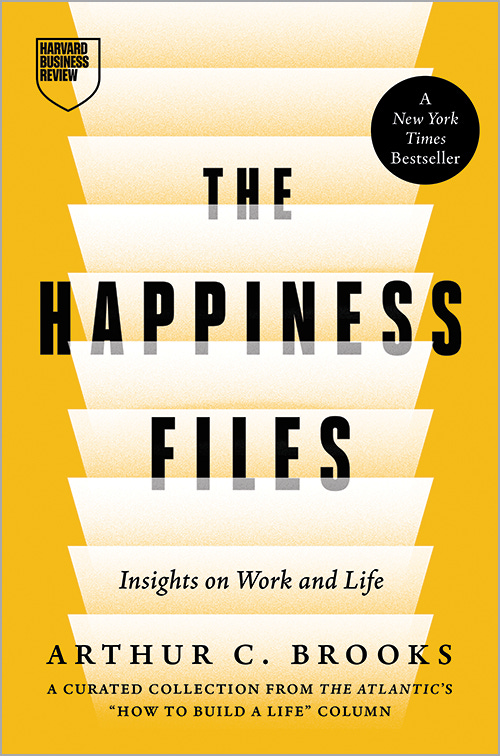
Imagine if your life were a startup. How would you shape, structure, and lead it to be most successful? That’s the question at the heart of The Happiness Files by Arthur C. Brooks, a collection of essays drawn from his weekly column in The Atlantic, bestselling books, and Harvard Business School course, “Leadership and Happiness.” His answer is deceptively simple: manage your life in ways that lead to rewards that are actually valuable; love, enjoyment, satisfaction, and meaning. Or, in other words, happiness.
The Happiness Files is a solid read. Made up of 33 short essays, it’s easy to jump between topics like procrastination, work–life balance, and defining success. And what makes the occasional optimization language—backed by social science research—palatable is the “end” Brooks consistently directs readers toward: the objective value of love and happiness, which he openly derives from his Catholic faith. According to Brooks, we weren’t made to spend our lives collecting wealth and power; we were made to pursue love and happiness. If your life is a startup, that’s your bottom line.
Another key idea in his writing is that “happiness is not a feeling; it’s something you can get better at.” No surprise that a social scientist who teaches a course on happiness would frame it as a skill, but this becomes particularly interesting when thinking about New Year’s resolutions. We tend to believe that achieving a goal will bring lasting happiness, but our satisfaction is usually short-lived. Before long, we move the promise of happiness out of the present and into the future, onto the next goal.
Brooks suggests shifting our focus away from outcomes and toward daily practices, asking whether they align with values like love and happiness rather than expecting those values to arrive once a larger objective is achieved. As he puts it:
“Goals don’t make you happy. Habits do. Goals are something you achieve once; habits are something you live every day… Happiness is not a destination to be reached; it is a direction to be traveled.”
Goals and resolutions often fail because we load them with the promise of future happiness. But by attending to daily practices, relationships, meaning and grace, our lives can be opened up to humble transformations over time, rather than becoming another self-improvement project fueled by willpower alone.
I find Brooks helpful here, though perhaps not in the way he intends. Shifting happiness away from our successes is a message worth shouting from every rooftop and pulpit in town. But suggesting that we can attain happiness through preferred daily habits can quietly sound like we just need to choose happiness—something I’ve tried to shout at my disappointed five-year-old, who has enough wisdom to reply, “Daddy, it’s just not that easy.”
The deeper wisdom comes from examining our daily practices, assessing how they align with values like love and happiness, and then (most importantly) discovering how often we still fail to be happy, patient, kind, forgiving, or content on our own. The wisdom for 2026, and for all time, is that there are places in our lives, wounds and challenges, that can only be filled and healed by God and his grace alone.
I’m not entirely sure why I prefer the word goal over resolution. Maybe it’s because a resolution tends to announce a dramatic change just over the horizon, while a goal can be something small and repeatable, something we attempt imperfectly and expect to fail at along the way. Or maybe (definitely) it’s just because I like the slight separation it gives me from the rest of you naïve resolution setters.
Of course, goals share the same genetic weakness as resolutions. Given enough time and a little sprinkling of human nature, both are guaranteed to turn into resentment when we fall short. So perhaps the distinction doesn’t really lie in what we call these ambitions, but in the posture we adopt toward them and the environment in which we tend them.
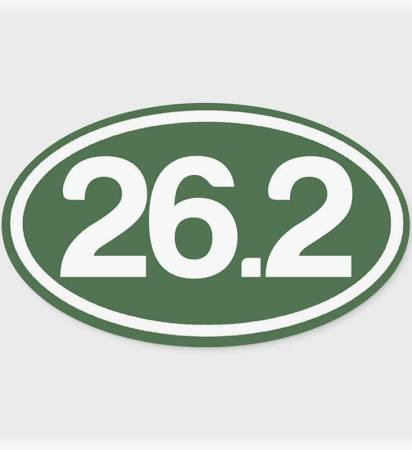
I texted a friend this morning to announce my goal of running a (cumulative!!) marathon every month this year. He replied that his goal was to do one pull-up. We’re impressive athletes…What I love about these goals isn’t just that they’re achievable, but that they’ve already giving us reason to talk about something together, and most importantly laugh at ourselves in the process. Sharing goals is less about accountability and more about humility: being honest about what we’re attempting, how it’s going, and why we want these things in the first place (we want to look better, feel better, and move better when our children, wives and friends need us).
If you’re interested in seeing how fun setting goals with a group of friends can be, check out this podcast from No Laying Up:
The real goal of this year is to identify the places in my life that need attention while recognizing that they’re problems only God himself can solve. Impatience, loneliness, insecurity, anger, entitlement (I’m describing my friend, not myself), these are the areas of our lives most ripe for resolutions. And yet the truth is that God’s grace is our only hope for deliverance from the plagues they bring down upon our lives.
With a little humor, a little humility, and maybe a little friendship, perhaps the goals you set for 2026 can be less about self-improvement and more about naming the places in your life that only God can fill with grace upon grace.
So, make some goals, share them with friends and prepare yourself for a year of disappointment, laughter and grace.
Merry Christmas and Happy New Year!
***I was recently on the Make the Most of Your Money Podcast. Check it out here:
Let me know if you’d be interested in a Cross Street podcast, and say a prayer that my friends agree to do it (E & T, give the people what they want!)
You may also like "goals" because you're such a sports fan. To me, a fan but not a fanatic, it just connotes something to look forward to. It's a positive term; it gives me a little rush, while "resolution" makes my jaw clench.
My reading goal for 2026 is to finally read three books I've owned for years but have never gone through from start to finish: Aristotle's Niomachean Ethics, Herodotus's History, and Charles Cochrane's Christianity and Classical Culture, which I bought after reading that it was a big influence on Auden. It may even improve my poetry, but I doubt that!